Since December 2025
SeptiConnect
A platform for a founder who had worked in the field for years.
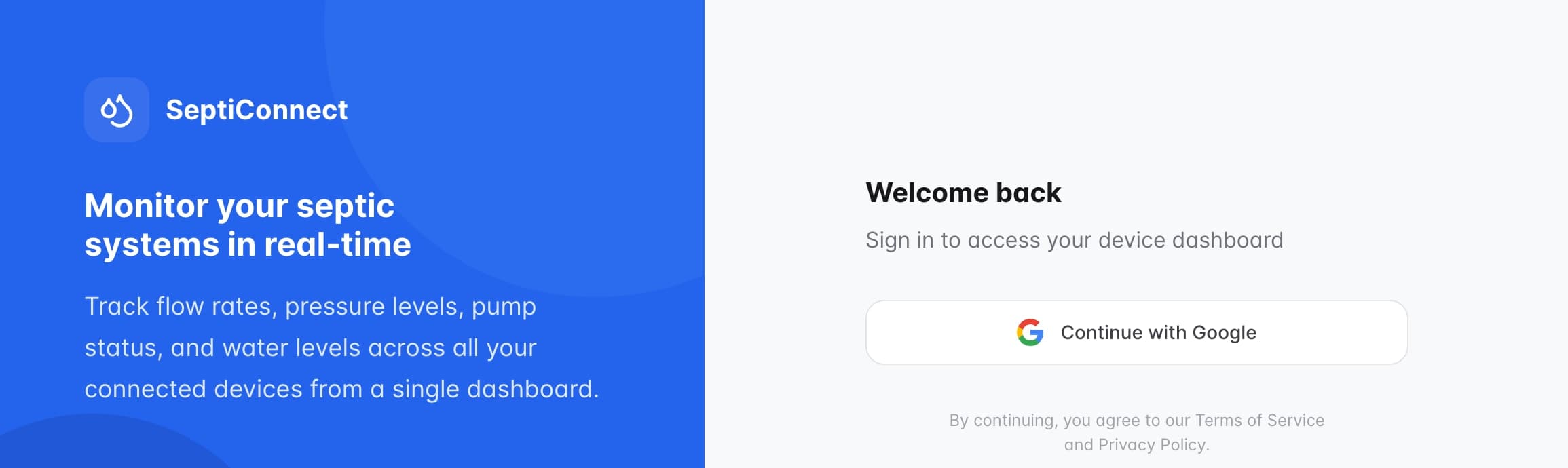
SeptiConnect is for monitoring septic tanks on large rural properties. The founder couldn't find a product that filled the gap, so they launched their own platform, and we built it.

What it does
Connected devices
Flow rates, pressure levels, pump status and water levels from every connected device, in one dashboard.
In the field
Technicians fill out forms to report issues from site.
In the office
Admins receive the submissions, get alerts and track each one through.
How we built it
An introduction through RTM Works
The founder came to us through RTM Works, part of RTM Manufacturing, which we've built for since November 2025. They had worked in the field for years, and the existing tools they used weren't doing the job, so they decided to build their own product.
Scoping workshops
Before any code was written, we ran a series of workshops with the founder to understand where the product sits: who uses it, what each person needs to see and do, and which device readings matter. Technicians needed to report issues from site, and admins needed to see every report, get an alert and follow each one through. The workshops ended with a written scope for the first version.
Proposed solutions
We came back with 3 ways to build it: a web app on its own, a web app with a separate mobile app for technicians in the field, or a progressive web app that installs on a phone like an app. The founder chose a web app built to work well on phones, because one app let us release changes faster and keep improving it in small steps.
Hosting on AWS
We set up the AWS accounts SeptiConnect runs on and the infrastructure inside them. The app runs in containers on Amazon ECS behind load balancers, with AWS Lambda functions alongside it.
Development
We built it in 5 stages. The finished product has 3 parts: a dashboard showing flow rates, pressure levels, pump status and water levels from every connected device, the forms technicians fill out on site, and the alerts and tracking for admins. Throughout, the founder followed progress the way every client does: a preview link to click through, regular check-ins and written updates.
Testing rounds
We ran several rounds of testing, and 3 groups tested it: our team, the founder's team, and an independent tester who hadn't worked on it. An outside tester catches what the people who built it, and the people who asked for it, are too close to see.
Delivery and handover
SeptiConnect went live once testing was done. Nothing was switched on until it had been running and tested, the rule we follow on every build. Handover included training for the founder's team, support through go-live, written guides, and a support procedure so they know how to raise a problem.
Tell us what you need built or looked after
We'll reply within 1 business day to arrange a time. Ongoing support is a monthly retainer, and we work out pricing on the call.
Book a call